Trump’s Grip: A Double-Edged Sword for GOP’s Congressional Future
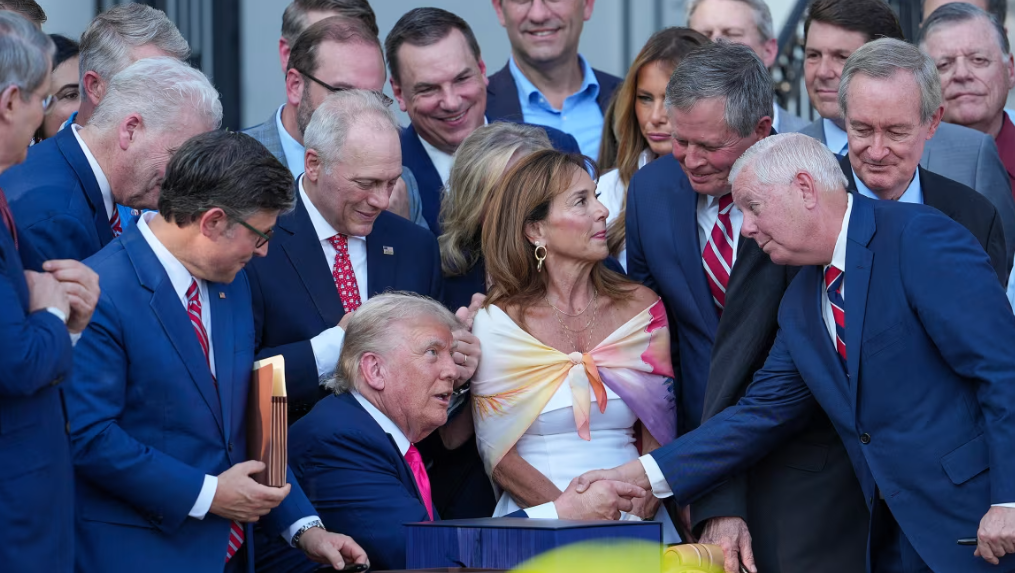
The recent wave of Republican retirements signals President Donald Trump’s unprecedented influence over the GOP. But as the party aligns more rigidly with his agenda, questions are emerging about its ability to maintain control of the House and Senate. Is unwavering loyalty to Trump becoming a liability for the GOP’s broader electoral success?
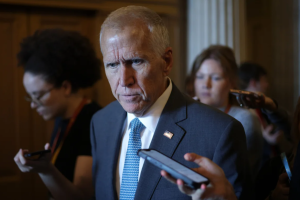
Last week’s back-to-back retirement announcements from Senator Thom Tillis of North Carolina and Representative Don Bacon of Nebraska, both known for their rare attempts at independence from President Donald Trump, underscore a significant shift within the Republican Party. These departures are not isolated incidents; they follow a pattern of GOP legislators who, after diverging from Trump’s stance, have either retired or faced primary defeats. Notable figures include former Senators Jeff Flake and Bob Corker, and former Representatives Liz Cheney and Adam Kinzinger.
Tillis and Bacon’s decisions, coming amidst intense debate over the party’s budget and tax legislation, highlight Trump’s success in quashing dissent within the GOP. As Charlie Dent, a former centrist Republican representative, observes, these retirements suggest that a “pragmatic and bipartisan” style of Republicanism is increasingly unwelcome.
The Unspoken Cost of Unanimity
While Trump’s mastery over the GOP is undeniable, it raises a critical question: can a party so thoroughly molded in his image consistently secure majorities in both chambers of Congress? The diminishing number of congressional Republicans willing to distance themselves from the former president means the GOP is now testing whether 218 House districts and 50 Senate seats will elect candidates who are, in essence, undiluted Trump loyalists.
Few strategists on either side of the aisle have a definitive answer. However, many agree that the GOP’s path to maintaining its majorities narrows considerably if candidates, even in swing states and districts, feel compelled to embrace the more polarizing aspects of Trump’s platform.
“In a post-Trump world, 100% loyalty is the party litmus test,” states Ken Spain, a GOP consultant and former communications director for the National Republican Congressional Committee. “There is very little room for nuance, even if it means putting the House and Senate majorities to the test.”
The Era of Lockstep Voting
Historically, congressional members frequently broke from their party’s dominant positions, even opposing a president from their own party. This was evident with East and West Coast Republicans and the “blue dog” Southern and rural Democrats.
However, tolerance for such defections has dwindled over the past generation. This shift is largely attributed to the ideological realignment of the electorate, leading to more uniform views within each party’s voter base. Both parties, in both chambers, now resemble a quasi-parliamentary system, with legislators voting largely in lockstep with their own side. For example, during President Joe Biden’s initial two years, only one House Democrat (Jared Golden of Maine) voted against his “Build Back Better” plan.
Legislators who deviate from their party’s stance on significant votes, like Tillis did on Trump’s agenda bill, now face increased pressure. While liberal interest groups also challenge Democrats who frequently vote against their party (as seen with Senators Joe Manchin and Kyrsten Sinema, who ultimately became independents), the pressure from Trump on Republicans is far more intense.
Matt Bennett, Executive Vice President for External Affairs at Third Way, a centrist Democratic group, describes Trump’s influence as an “extinction-level event for Republican moderates.” Charlie Dent, now executive director of the Aspen Institute’s congressional program, concurs, asserting that no president has been as relentless as Trump in crushing internal dissent.
“Most presidents understood that today’s dissenter is tomorrow’s ally,” Dent explains. “They recognize there’s always another vote. But Trump always treats the next vote as the last. Everything is a litmus test with him.”
A critical change, Dent notes, is that Republican congressional leadership now largely reinforces Trump’s pressure. Traditionally, leaders prioritized protecting members in marginal seats. Today, it seems the GOP leadership is more focused on appeasing Trump and the demands of hardline conservatives in safe districts who fear primary challenges. “It seems,” Dent said, “the Republican leadership is more interested in protecting the president than protecting their most vulnerable members.”
The Shifting Significance of Independent Voters
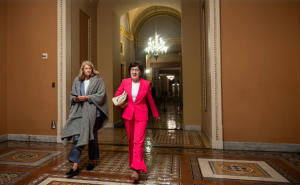
Even Trump appears to acknowledge that Republicans in swing areas might need some flexibility. Senator Susan Collins of Maine, the sole GOP senator from states that voted against Trump in all three of his presidential campaigns, has not been publicly attacked by him for voting against the budget bill.
Yet, as recent floor debates have shown, virtually no congressional Republican feels comfortable criticizing any significant aspect of Trump’s agenda, regardless of the impact on their constituents.
“Trump is not worried about what a bill means to somebody’s home state or district,” says long-time Republican pollster Glen Bolger. “It’s his way or the highway. You cannot cross the president because he will cross you off.”
Voter attitudes toward an incumbent president have increasingly shaped House and Senate races. Trump’s relentless demand for loyalty could push this trend further, with GOP candidates effectively running with his brand visibly stamped on them.
Can Republicans secure enough seats with this positioning to consistently control both chambers? The party’s electoral performance since Trump’s rise offers some optimism, particularly in the Senate. Trump has won 25 states in all three of his presidential campaigns, and Republicans currently hold all 50 of those states’ Senate seats, up from 42 in 2017. While Democrats hope to contest North Carolina’s open seat next year, Republicans, until Democrats can compete in more states like Ohio, Iowa, or Texas, will have an easier path to a Senate majority, as noted by Kyle Kondik, managing editor for the Sabato’s Crystal Ball election newsletter.
In House races, the trends initially seem equally encouraging. Trump won 230 House districts in 2024 (matching his 2016 performance), which would provide a comfortable majority if GOP candidates also won those districts. However, a uniformly Trumpist GOP may find it harder to hold the House than the Senate. In the more challenging electoral climate of 2020, Trump won only 202 House districts, and even last year, he won about 40 of his carried districts by single-digit margins. Analysts like Kondik suggest Democrats could reclaim enough of these seats to flip the majority in a more favorable national environment, which widespread public disapproval of the “big beautiful bill” might help create.
“Basically, by all the vulnerable Republican members voting for the bill, you are making it easier for the opposition to nationalize your race, which is what Democrats are going to want to do,” Kondik explained.
By falling in line so reliably behind Trump, Republicans in competitive areas (with the possible exception of Collins) have forfeited a common argument used by legislators in such places: that they will support their party’s agenda when it benefits their constituents and oppose it when it doesn’t. Dozens of House Republicans from districts facing significant losses from the budget bill’s Medicaid and clean energy cuts voted for it regardless.
Democrats view this as a major vulnerability, especially in the House seats they aim to contest. Courtney Rice, communications director for the Democratic Congressional Campaign Committee, states, “They make a ton of noise, but at the end of the day they are not going to step out of line with Trump and DC leaders, and for the districts we are competing in that is the worst type of thing you can do.”
Dent agrees, calling this pattern a grave risk for the GOP majority. Pressuring swing district Republican representatives to toe the line on every major issue “is a recipe to elect a Democratic House,” he said. “Trump might want to get used to that now and get ready for all the subpoenas and aggressive oversight that will come with it.”

The Math of Loyalty vs. Independence
While pollster Glen Bolger once believed winning independent voters was crucial, he now has doubts. He suggests that legislators who “show independence” from Trump risk depressing turnout among his core supporters, potentially offsetting any gains from independent voters. “That’s a math thing they are all going to be doing in those swing seats,” he said.
Regardless of the national environment next year, the Senate map will be challenging for Democrats to recapture. And the electorate’s sorting, combined with increasingly sophisticated gerrymandered Congressional districts, makes it unlikely that Democrats in 2026 will capture as many House seats as the opposition party did in previous midterms marked by backlash against a sitting president’s agenda (e.g., 1994, 2006, 2010, and 2018).
However, enough swing seats remain in play to give Democrats a plausible chance of overturning the GOP’s historically narrow House majority. In crafting their budget bill, Republican leaders made extraordinarily few concessions to the political needs of their representatives in marginal seats (or vulnerable senators like Collins and Tillis). Instead, they prioritized incorporating as many of Trump’s priorities as possible and satisfying the demands of the hardcore conservatives in safe seats, who represent a larger share of GOP legislators in both chambers.
If this increases the odds of some of those swing-district Republicans losing next fall—endangering the GOP majority in the House and conceivably, though less likely, the Senate—it appears to be a price Trump and Congressional leaders are willing to pay. “They want to get as much as they can in the bill,” Dent said, “and these guys are going to be the collateral damage.”
In the long arc of Trump’s career, the “One Big Beautiful Bill” may stand as another example where he reaps the rewards, and others around him bear the cost.
For more in-depth analysis and breaking news, visit https://24software.click/.